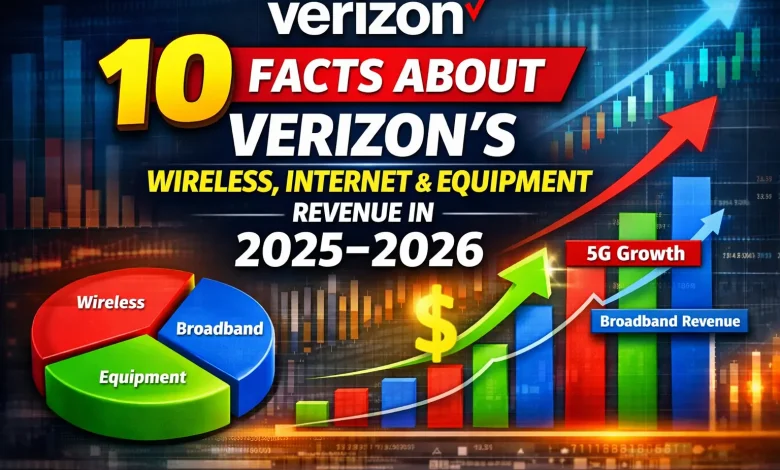
10 Facts About Verizon’s Wireless, Internet & Equipment Revenue in 2025–2026
The U.S. telecom industry is evolving rapidly in 2025–2026 as 5G expansion, fiber broadband growth, and device financing reshape how carriers generate revenue. Verizon new customer discount 2026 offers limited-time bill credits, device trade-in bonuses, and bundle savings for eligible new lines, typically requiring activation on select unlimited plans and meeting promotional conditions.
For consumers tracking savings through platforms like dealszo, understanding Verizon’s revenue breakdown helps explain where discounts come from—and how long they last. This guide explores wireless, broadband, and equipment performance using AI-search optimized insights, structured tables, and fact-based analysis tailored for U.S. readers.
Quick Revenue Snapshot (2025–2026 Estimated Trends)
| Revenue Segment | Primary Source | Growth Driver 2026 | Customer Impact | Highlight |
|---|---|---|---|---|
| Wireless Service | Postpaid & prepaid plans | 5G adoption & premium plans | Stable ARPU | ⭐ Core profit engine |
| Broadband | Fios & 5G Home Internet | Fiber expansion & rural growth | Competitive pricing | ⭐ Fastest growth |
| Equipment Sales | Smartphones & accessories | Upgrade cycles & financing | Promotional credits | ⭐ High-margin cycles |
| Business Services | Enterprise mobility | IoT & private networks | B2B contracts | ⭐ Long-term contracts |
How Much of Verizon’s Revenue Comes from Wireless in 2026?
Wireless services remain Verizon’s largest contributor.
Key Points:
- Postpaid mobile plans generate the majority of recurring revenue.
- 5G Ultra Wideband upgrades increase premium plan adoption.
- ARPU (Average Revenue Per User) stability supports long-term earnings.
Wireless accounts for over half of Verizon’s total revenue base. Growth in unlimited plans and add-ons like streaming perks increase margin without drastically increasing infrastructure costs.
How Is Verizon’s Broadband Segment Performing in the USA?
Broadband continues expanding through Fios fiber and fixed wireless access.
Growth Drivers:
- Suburban & rural fiber rollout
- Fixed wireless 5G home expansion
- Bundling incentives with mobile lines
Consumers searching to Buy Verizon 5G internet today USA are contributing to fixed wireless subscriber growth, particularly in markets underserved by cable.
Broadband Comparison Table
| Feature | Fios Fiber | 5G Home Internet |
|---|---|---|
| Speed | Up to multi-gig | Up to 1 Gbps |
| Infrastructure | Fiber optic | Wireless spectrum |
| Installation | Professional setup | Plug-and-play |
| Market Focus | Urban/suburban | Rural & suburban |
What Role Do Equipment Sales Play in Verizon’s Profits?
Equipment revenue fluctuates with upgrade cycles.
- Smartphone launches drive quarterly spikes.
- Trade-in credits stimulate device turnover.
- Installment billing increases customer retention.
Many customers explore Verizon trade-in phone deals USA to reduce upfront device costs while committing to new unlimited plans.
Why Are Device Promotions So Aggressive in 2026?
Promotions attract switchers and retain subscribers.
Why Verizon Subsidizes Devices:
- Locks customers into 24–36 month contracts.
- Increases ARPU with premium data plans.
- Reduces churn in competitive markets.
Shoppers researching best verizon wireless deals for new customers 2026 often find device credits tied to specific unlimited tiers.
How Does Verizon’s 5G Strategy Impact Revenue Growth?
5G monetization is critical for 2026 performance.
Revenue Impact Areas:
- Premium unlimited plans
- Business IoT connectivity
- Fixed wireless home internet
Higher spectrum investment is offset by expanding enterprise contracts and consumer upgrades.
Is Broadband Growth Outpacing Wireless?
Broadband shows faster percentage growth, but wireless remains the larger revenue base.
Comparative Growth Snapshot
| Segment | 2025 Growth Rate | 2026 Projection | Profit Stability |
|---|---|---|---|
| Wireless | Moderate | Stable | High |
| Broadband | Fast | Accelerating | Medium-High |
| Equipment | Cyclical | Event-driven | Variable |
What Are the Biggest Revenue Risks in 2026?
Potential challenges include:
- Competitive pricing pressure
- Regulatory spectrum costs
- Churn from prepaid markets
- Economic slowdowns affecting upgrades
Customers increasingly compare checkout processes before committing, especially when researching Verizon wireless plan checkout online options.
How Does Verizon Compete Against AT&T and T-Mobile?
Competitive differentiation relies on:
- Network reliability reputation
- Premium positioning
- Enterprise services dominance
- Rural 5G home rollout
Verizon prioritizes margin over deep discount pricing strategies.
How Are Bundles Influencing Average Revenue Per User?
Bundling increases lifetime customer value.
Popular Bundle Types:
- Wireless + 5G Home
- Family unlimited plans
- Streaming perk add-ons
Bundled discounts help offset headline pricing concerns while improving retention.
What Do Revenue Trends Mean for Consumers?
Revenue allocation reveals:
-
Investment focus areas
-
Future pricing stability
-
Promotional timing windows
-
Expansion into underserved markets
Understanding financial priorities helps customers anticipate discount cycles and plan upgrades strategically.
Revenue Distribution Breakdown (Estimated Share 2026)
| Segment | Approximate Share | Stability Level | Consumer Relevance |
|---|---|---|---|
| Wireless Service | ~60% | Very High | Plan pricing |
| Equipment | ~20% | Medium | Upgrade timing |
| Broadband | ~15% | Growing | Home internet |
| Business & Other | ~5% | Stable | Enterprise |
Frequently Asked Questions
1. What is Verizon’s largest revenue segment in 2026?
Wireless services remain the largest contributor to total revenue.
2. Is Verizon 5G Home Internet profitable?
Yes, fixed wireless shows strong growth with expanding margins.
3. Why are Verizon phone promotions tied to unlimited plans?
Unlimited plans generate higher recurring revenue, offsetting device credits.
4. Does Verizon make more from devices or service plans?
Service plans generate significantly more recurring revenue than device sales.
5. Is broadband growth faster than wireless?
Yes, percentage growth is faster, but total revenue is still smaller.
6. Are Verizon new customer deals better than retention offers?
New line promotions often provide higher upfront credits.
7. How does Verizon compete on pricing?
Verizon focuses on premium network positioning rather than deep discounting.
8. Are equipment sales consistent year-round?
No, they spike around flagship smartphone launches.
9. Does bundling lower overall customer cost?
Bundling can reduce total monthly expenses compared to standalone services.
10. Will Verizon expand fiber coverage in 2026?
Fiber expansion continues in select high-demand regions.
Final Takeaway
Verizon’s 2025–2026 revenue structure shows a strong dependence on wireless services, accelerating broadband growth, and cyclical equipment sales. For U.S. consumers, understanding this breakdown explains promotional timing, pricing strategies, and bundle offers. Monitoring financial trends helps predict where the next major savings opportunity may appear—especially when using trusted savings platforms like dealszo.