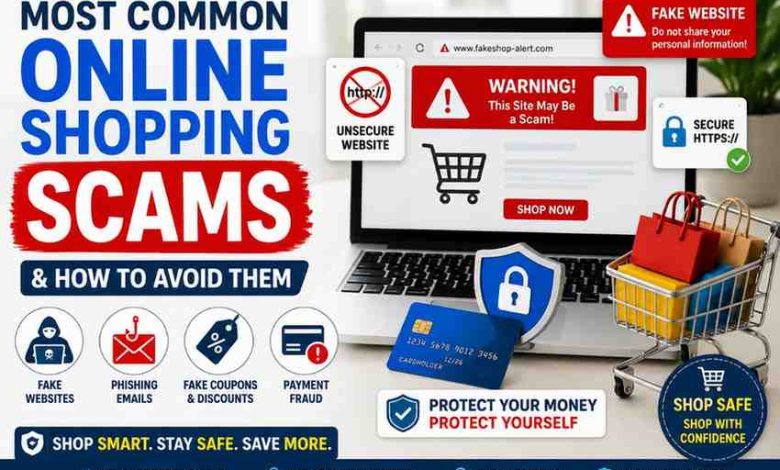
Most Common Online Shopping Scams & How to Avoid Them
DealsZo Note: Get verified deals in DealsZo, per day updates.
Online shopping scams continue to target millions of Americans each year through fake online stores, phishing emails, counterfeit products, and fraudulent coupon offers. Learning how to identify common warning signs, verify retailers, and use secure payment methods can help you shop safely while avoiding costly scams.
| Topic | Details |
|---|---|
| Article Focus | Common online shopping scams and prevention tips |
| Best For | U.S. online shoppers |
| Main Risk | Fake stores, phishing, counterfeit products, payment fraud |
| Safe Payment Methods | Credit cards, trusted digital wallets |
| Best Prevention | Verify retailers before purchasing |
| Updated | July 2026 |
Why Online Shopping Safety Matters
Online shopping has become part of everyday life for millions of Americans. Whether you’re buying electronics, clothing, beauty products, home essentials, or holiday gifts, shopping online offers convenience and competitive prices. Unfortunately, scammers know this and constantly develop new ways to trick shoppers into sharing personal information or paying for products that never arrive.
Many scams appear convincing because fraudulent websites now use professional designs, fake customer reviews, and copied product images from legitimate retailers. Some even advertise through social media or search engine ads, making it difficult for shoppers to tell the difference between genuine businesses and scam websites.
The good news is that most online shopping scams can be avoided by recognizing common warning signs and following safe shopping practices. This guide explains the most common scams affecting U.S. shoppers and shares practical steps to help protect your money and personal information.
What Is an Online Shopping Scam?
An online shopping scam is a fraudulent scheme designed to convince consumers to purchase products from fake websites, disclose sensitive information, or make payments that benefit criminals instead of legitimate businesses.
Scammers may create fake online stores, send phishing emails, advertise unrealistic discounts, or impersonate trusted brands. Their goal is usually one or more of the following:
- Steal payment information
- Collect personal data
- Sell counterfeit products
- Deliver low-quality items
- Never ship purchased products
- Install malware through fake websites
Unlike traditional retail fraud, online shopping scams can target thousands of people simultaneously, making them one of the fastest-growing forms of consumer fraud.
Why Online Shopping Scams Continue to Increase
Several factors contribute to the rise in online shopping fraud across the United States.
More People Shop Online
Millions of Americans purchase products online every week. As online shopping grows, scammers have more opportunities to target consumers looking for deals, limited-time offers, or hard-to-find products.
Professional-Looking Fake Websites
Years ago, scam websites were often easy to recognize because they looked poorly designed. Today, fraudulent websites frequently copy legitimate online stores, making them appear trustworthy at first glance.
They may include:
- Product photos
- Customer reviews
- Professional logos
- Secure-looking checkout pages
- Fake trust badges
These tactics make shoppers feel comfortable entering payment information.
Social Media Advertising
Scammers increasingly promote fake stores through sponsored advertisements on social media platforms. Attractive product photos combined with extremely low prices encourage impulse purchases before shoppers research the seller.
Artificial Intelligence
AI tools now help criminals generate convincing product descriptions, fake customer service responses, and realistic-looking marketing materials, making scam websites more difficult to identify.
Most Common Online Shopping Scams
Understanding how these scams work is the first step toward avoiding them.
1. Fake Online Stores
One of the most common online shopping scams involves completely fake ecommerce websites.
These sites often advertise products at prices far below market value to attract buyers.
Common examples include:
- Brand-name shoes for 80% off
- New smartphones for half price
- Luxury handbags at unrealistic discounts
- Gaming consoles below retail value
After receiving payment, scammers may:
- Never ship anything
- Send counterfeit products
- Deliver completely different items
- Stop responding to customers
Warning Signs
- Extremely low prices
- No company information
- Poor grammar
- No customer support
- No return policy
- Recently created website
2. Fake Marketplace Sellers
Popular online marketplaces allow third-party sellers to list products.
While most sellers are legitimate, scammers sometimes create fake accounts that disappear after receiving payment.
They may:
- List products they don’t own
- Use stolen product photos
- Sell counterfeit merchandise
- Request payment outside the marketplace
Never leave the official checkout process when purchasing through online marketplaces.
3. Phishing Shopping Scams
Another growing threat involves phishing shopping scams.
These scams typically begin with an email or text message claiming:
- Your package couldn’t be delivered.
- Your payment failed.
- Your account needs verification.
- Your order has been canceled.
- A refund is waiting.
The message includes a fraudulent link directing users to fake login pages.
Once shoppers enter usernames, passwords, or payment details, criminals steal the information.
Common Examples
- Fake delivery notifications
- Fake retailer account alerts
- Fake order confirmations
- Fake refund requests
Always visit a retailer’s website directly instead of clicking unexpected links.
4. Fake Coupon Websites
Everyone enjoys saving money, making coupon scams particularly effective.
Some fake coupon websites advertise impossible discounts simply to collect:
- Email addresses
- Credit card information
- Personal information
Others require users to complete surveys before revealing “exclusive” coupon codes that never actually work.
Some even install malware through downloadable browser extensions.
Safe Coupon Tips
Look for:
- Verified offers
- Trusted coupon sources
- Active expiration dates
- Clearly explained terms
Avoid websites promising unrealistic discounts like “100% off every order.”
5. Counterfeit Product Scams
Counterfeit products have become increasingly sophisticated.
Instead of receiving genuine products, shoppers receive fake versions that imitate:
- Electronics
- Designer clothing
- Beauty products
- Supplements
- Shoes
- Watches
Counterfeit items often have:
- Poor packaging
- Low-quality materials
- Missing warranties
- Different serial numbers
Besides financial loss, counterfeit health and beauty products can pose safety risks.
Fake Discount Scams
Many fraudulent websites rely on unbelievable discounts to create urgency.
Examples include:
- 90% off laptops
- Designer handbags for $40
- Premium smartphones for $150
- Luxury watches under $100
These prices often encourage shoppers to make quick decisions without verifying the retailer.
A legitimate retailer may offer seasonal promotions, but consistently unrealistic discounts deserve extra scrutiny.
Warning Signs Every Shopper Should Know
Recognizing suspicious behavior before completing a purchase can prevent many scams.
Prices That Seem Too Good to Be True
If one website sells an expensive product for a fraction of its normal price, investigate carefully before buying.
Scammers know bargain hunters may overlook warning signs when they believe they’re getting an exceptional deal.
Missing Contact Information
Legitimate retailers usually provide:
- Business address
- Phone number
- Email support
- Customer service information
Fake stores often hide this information or provide non-working contact details.
Poor Website Quality
Common indicators include:
- Broken links
- Spelling mistakes
- Generic product descriptions
- Blurry images
- Duplicate content
While not every small business has a perfect website, multiple quality issues should raise concerns.
Limited Payment Options
Be cautious if a website only accepts:
- Wire transfers
- Cryptocurrency
- Gift cards
- Peer-to-peer payments
These payment methods usually provide little or no consumer protection.
Trusted retailers generally accept major credit cards and secure payment services.
Pressure to Buy Immediately
Scammers frequently create urgency.
Examples include:
- Only 2 left!
- Sale ends in 10 minutes!
- Buy now before it’s gone forever!
Limited-time promotions are common in retail, but excessive pressure should encourage shoppers to slow down and verify the offer.
How to Verify an Online Store Before Buying
One of the best ways to stay safe is learning how to verify an online store before buying.
Before placing an order, check the following:
Review the Website Carefully
Look for:
- Professional design
- Clear policies
- Complete contact information
- Business transparency
Read Customer Reviews
Search beyond the retailer’s own website.
Independent reviews often reveal:
- Shipping experiences
- Product quality
- Customer service
- Refund experiences
Focus on consistent patterns rather than one or two individual complaints.
Check Website Security
Before entering payment information:
- Look for HTTPS in the address bar.
- Confirm the browser displays a secure connection.
- Avoid entering payment details on unsecured websites.
A secure connection doesn’t guarantee legitimacy, but reputable online retailers typically encrypt customer data.
Research the Company
Search the retailer’s name together with phrases like:
- Reviews
- Complaints
- Scam
- Customer service
This simple step may reveal recurring issues reported by previous customers.
DealsZo Shopping Tip
Before making an online purchase, compare available promotions, discounts, and verified offers from reliable sources instead of choosing the first deal you find.
Fake Delivery Notification Scams
One of the fastest-growing scams targets people who regularly shop online. Criminals send fake emails or text messages claiming there is a problem with a package delivery.
These messages often appear to come from well-known shipping companies or retailers. They may include company logos, tracking numbers, and professional formatting to make the message look legitimate.
Common messages include:
- Your package could not be delivered.
- Your delivery is waiting for confirmation.
- Pay a small delivery fee to receive your package.
- Your order has been delayed.
- Verify your shipping address.
Clicking the provided link may lead to a fake website designed to steal login credentials or payment information.
How to Stay Safe
- Track packages through the retailer’s official website or shipping app.
- Avoid clicking links in unexpected text messages or emails.
- Type the retailer’s web address directly into your browser.
- Ignore requests for small “redelivery fees” unless verified through the official carrier.
Social Media Shopping Scams
Social media platforms have become popular places for discovering new brands and products. Unfortunately, scammers also use these platforms to promote fake stores and counterfeit products.
A typical scam starts with an attractive advertisement offering huge discounts on popular items.
Examples include:
- Outdoor furniture for 80% off
- Designer handbags at clearance prices
- Premium fitness equipment for unusually low prices
- Trending beauty products with unbelievable discounts
After payment, customers may receive nothing, a counterfeit item, or a product that looks nothing like the advertisement.
Warning Signs
- Newly created business pages
- Few genuine customer interactions
- No business address
- Poor grammar in advertisements
- Unrealistic prices
- Comments disabled on posts
Before purchasing from a social media ad, research the retailer independently.
Online Marketplace Fraud
Large online marketplaces offer millions of products from third-party sellers. While many sellers are trustworthy, fraudulent listings occasionally appear.
Scammers may:
- Copy legitimate product photos
- List expensive products at unusually low prices
- Request payment outside the marketplace
- Ship counterfeit merchandise
- Provide fake tracking numbers
Shop More Safely
- Buy from highly rated sellers.
- Read recent customer reviews.
- Avoid communicating outside the marketplace.
- Never pay using gift cards or wire transfers.
- Report suspicious listings immediately.
Subscription Trap Scams
Some online stores advertise products at extremely low prices but automatically enroll customers in expensive monthly subscriptions.
Examples include:
- Beauty boxes
- Health supplements
- Skin care products
- Fitness programs
- Coffee subscriptions
The checkout page may hide recurring charges in small print.
Warning Signs
- “Free trial” offers requiring a credit card
- Automatic renewal policies
- Difficult cancellation procedures
- Missing billing details
Always review the checkout page carefully before completing your purchase.
Counterfeit Brand Websites
Some scammers create websites that closely imitate well-known brands.
These fake websites often:
- Copy logos
- Use similar web addresses
- Reproduce official product images
- Duplicate product descriptions
The goal is to convince shoppers they are purchasing directly from a trusted retailer.
How to Verify a Website
Before buying:
- Double-check the website address.
- Look for spelling differences in the domain name.
- Visit the retailer through its official homepage instead of clicking advertisements.
- Compare contact information with official sources.
Fake Customer Support Scams
Some scammers pretend to represent customer service departments.
They may contact shoppers through:
- Phone calls
- Emails
- Live chat
- Social media messages
They often claim:
- Your order has a problem.
- Your payment failed.
- A refund requires account verification.
- Additional information is needed.
These conversations usually end with requests for passwords, verification codes, or payment information.
Legitimate companies rarely ask customers to share passwords or one-time security codes.
Credit Card and Payment Scams
Payment fraud remains one of the biggest online shopping risks.
Criminals may steal payment information through:
- Fake checkout pages
- Malware
- Phishing emails
- Data breaches
- Unsecured websites
Once card details are stolen, unauthorized purchases may follow quickly.
Secure Online Payment Methods
Using secure online payment methods greatly reduces shopping risks.
Credit Cards
Credit cards typically offer:
- Fraud monitoring
- Chargeback protection
- Dispute resolution
- Zero-liability policies for unauthorized purchases (subject to issuer terms)
This makes them one of the safest payment options for online shopping.
Trusted Digital Wallets
Digital wallets provide an additional layer of security because they reduce how often your payment details are shared directly with merchants.
Benefits include:
- Encrypted transactions
- Faster checkout
- Reduced exposure of card information
- Built-in authentication features
Avoid Risky Payment Requests
Be cautious when a seller insists on:
- Gift cards
- Cryptocurrency
- Wire transfers
- Cash transfer apps for unknown sellers
These payment methods generally offer little or no buyer protection once funds are sent.
Holiday Shopping Scams
Scam activity often increases during major shopping seasons.
Popular events include:
- Black Friday
- Cyber Monday
- Christmas shopping
- Back-to-school sales
- Prime Day
- Memorial Day sales
High demand and limited-time offers encourage impulse buying, making shoppers more vulnerable.
Holiday Shopping Tips
- Compare prices before purchasing.
- Avoid panic buying.
- Verify limited-time offers.
- Shop from trusted retailers.
- Watch for fake countdown timers.
Fake Coupon and Promo Code Scams
Many scammers exploit shoppers searching for discounts.
They advertise:
- Exclusive promo codes
- Secret discounts
- Employee pricing
- Unlimited coupons
Some websites require users to:
- Install browser extensions
- Complete surveys
- Share personal information
- Create unnecessary accounts
In many cases, the promised coupon never works.
How to Find Legitimate Online Discounts
Instead of clicking random coupon links:
- Compare offers from trusted deal websites.
- Check retailer promotion pages.
- Review coupon expiration dates.
- Read offer terms before purchasing.
How to Shop Safely During Flash Sales
Flash sales can offer genuine savings, but they also attract scammers.
Before purchasing:
Compare Prices
A legitimate discount usually aligns with pricing offered by other major retailers.
If one website advertises a product for dramatically less than everyone else, investigate further.
Read the Return Policy
A trustworthy retailer clearly explains:
- Return windows
- Refund process
- Exchange policy
- Shipping responsibilities
Missing or vague return information should raise concerns.
Check Shipping Details
Reliable stores provide:
- Estimated delivery dates
- Shipping costs
- Tracking information
- Customer support
Scam websites often provide little or no shipping information.
Expert Tips for Safe Online Shopping
Shopping safely doesn’t require advanced technical knowledge. A few smart habits can significantly reduce your risk.
Compare Before You Buy
Never purchase from the first website you find.
Compare:
- Price
- Seller reputation
- Return policy
- Customer reviews
- Shipping information
Use Strong Passwords
Protect shopping accounts with:
- Unique passwords
- Password managers
- Multi-factor authentication when available
Avoid reusing passwords across multiple websites.
Monitor Financial Statements
Review your bank and credit card statements regularly.
Look for:
- Small unauthorized charges
- Unknown merchants
- Duplicate transactions
Reporting suspicious activity quickly can help limit losses.
Keep Devices Updated
Software updates often include important security improvements.
Update regularly:
- Web browsers
- Smartphones
- Computers
- Shopping apps
- Antivirus software
Common Mistakes That Make Shopping Riskier
Many scams succeed because shoppers act quickly without verifying important details.
Avoid these common mistakes:
Buying Based Only on Price
The lowest price isn’t always the best value.
Extremely cheap products may indicate:
- Counterfeit goods
- Fake websites
- Non-delivery scams
Ignoring Customer Reviews
Reviews can reveal recurring issues such as:
- Poor product quality
- Slow shipping
- Refund problems
- Fake merchandise
Look for balanced, recent feedback from multiple sources.
Shopping on Public Wi-Fi
Avoid entering payment information while connected to unsecured public Wi-Fi networks.
If necessary, use a trusted mobile connection or a secure virtual private network (VPN).
Sharing Too Much Personal Information
Only provide information necessary to complete your purchase.
Be cautious if a retailer requests:
- Social Security numbers
- Unnecessary identification documents
- Excessive personal details
Safe Shopping Checklist
Before placing any online order, ask yourself:
- Does the website look professional?
- Is the retailer well known or well reviewed?
- Are contact details clearly listed?
- Is the connection secure (HTTPS)?
- Does the return policy make sense?
- Are payment options secure?
- Have I compared prices elsewhere?
- Do customer reviews appear authentic?
If several answers raise concerns, consider purchasing from another retailer.
DealsZo Shopping Reminder
Finding a low price is only one part of shopping wisely. Comparing verified promotions, understanding retailer policies, and confirming that an offer is genuine can help reduce the risk of scams while maximizing savings.
Comparison Table: Common Online Shopping Scams
| Scam Type | How It Works | Biggest Warning Sign | How to Avoid It |
|---|---|---|---|
| Fake Online Store | Creates a fraudulent website to collect payments | Prices far below market value | Verify the retailer and read independent reviews |
| Phishing Email | Tricks shoppers into entering login or payment details | Unexpected emails asking you to verify an account | Visit the retailer’s website directly instead of clicking links |
| Fake Coupon Website | Promises unrealistic discounts to collect personal data | “100% Off” or impossible coupon offers | Use trusted deal websites and verify coupon terms |
| Counterfeit Products | Sells imitation products as genuine brands | Poor-quality images or vague product descriptions | Buy from authorized retailers or reputable sellers |
| Marketplace Fraud | Fake third-party sellers list products they don’t have | New seller with few or suspicious reviews | Purchase from established sellers with positive ratings |
| Fake Delivery Scam | Claims a package requires payment or verification | Unexpected shipping fee requests | Track packages through official shipping companies |
| Subscription Trap | Signs shoppers up for recurring charges | Hidden billing terms or free trials requiring payment | Read the checkout page and cancellation policy carefully |
| Social Media Scam | Fake advertisements promote unrealistic deals | New business pages with limited information | Research the retailer before purchasing |
Step-by-Step Guide: How to Shop Safely Online
Following a simple process before every purchase can significantly reduce the risk of becoming a victim of online shopping fraud.
Step 1: Research the Retailer
Spend a few minutes learning about the seller before placing an order.
Look for:
- Business history
- Customer reviews
- Contact information
- Return policy
- Social media presence
A legitimate business is usually transparent about who they are and how customers can reach them.
Step 2: Compare Prices
Finding a bargain is exciting, but comparing prices helps determine whether an offer is realistic.
If one website lists a product for hundreds of dollars less than every other retailer, investigate further before purchasing.
Remember:
Good deals exist.
Impossible deals usually don’t.
Step 3: Verify Website Security
Before entering personal information, confirm that the website uses a secure connection.
Look for:
- HTTPS in the website address
- A secure browser connection
- Professional checkout pages
Although HTTPS alone doesn’t guarantee a trustworthy retailer, it is an important security feature.
Step 4: Read Policies Carefully
Review the retailer’s:
- Shipping policy
- Return policy
- Refund policy
- Privacy policy
Clear policies often indicate a legitimate business.
Step 5: Use Secure Payment Methods
Whenever possible, pay with:
- Credit cards
- Trusted digital wallets
These payment methods generally offer better consumer protections than wire transfers, gift cards, or cryptocurrency payments.
Step 6: Save Your Order Information
After completing a purchase, keep:
- Order confirmation
- Invoice
- Tracking number
- Payment receipt
- Customer support information
These records are valuable if you need to dispute a charge or request assistance.
What to Do If You Become a Victim of an Online Shopping Scam
Even careful shoppers can occasionally encounter fraudulent websites. Acting quickly can reduce financial losses and improve the chances of resolving the issue.
Contact Your Bank or Credit Card Issuer
If payment information may have been compromised:
- Report the suspicious transaction immediately.
- Request a chargeback if appropriate.
- Ask about replacing your payment card if necessary.
- Continue monitoring your account for unauthorized activity.
Change Your Passwords
If you entered login credentials on a suspicious website:
- Change the password immediately.
- Update any other accounts using the same password.
- Enable multi-factor authentication whenever available.
Contact the Retailer
If you believe the issue may be a misunderstanding rather than fraud:
- Contact customer service.
- Keep records of all communications.
- Request written confirmation of any resolution.
Report the Scam
Reporting scams helps protect other shoppers and supports investigations into fraudulent activity.
Keep copies of:
- Emails
- Receipts
- Screenshots
- Website addresses
- Order confirmations
These details can be useful when reporting suspicious activity or disputing transactions.
Expert Tips for Smarter Online Shopping
Shopping safely is about building good habits rather than reacting after a problem occurs.
Shop With a Plan
Avoid making purchases simply because a countdown timer or “limited stock” message creates urgency.
Take a few minutes to compare prices, verify the retailer, and read reviews.
Be Careful With New Online Stores
Many legitimate businesses are new, but it’s still wise to do some research before buying from an unfamiliar retailer.
Look for:
- Real customer feedback
- Clear business information
- Transparent policies
- Secure payment options
Keep Software Updated
Regular updates improve the security of:
- Computers
- Smartphones
- Tablets
- Browsers
- Shopping apps
Updated software helps protect against known security vulnerabilities.
Watch for Seasonal Scams
Fraud tends to increase during major shopping events such as:
- Black Friday
- Cyber Monday
- Prime Day
- Christmas sales
- Back-to-school promotions
Scammers take advantage of increased shopping activity and consumers looking for fast deals.
Common Questions About Online Shopping Safety
1. What is the most common online shopping scam?
Fake online stores remain one of the most common scams. These websites accept payments but either never ship products or send counterfeit or incorrect items.
2. How can I tell if an online store is legitimate?
Check for secure website connections, clear contact information, transparent return policies, and independent customer reviews before making a purchase.
3. Are extremely low prices always a scam?
Not necessarily. Retailers may offer genuine discounts during sales events, but prices that are dramatically lower than every other seller deserve additional research before buying.
4. Is it safer to pay with a credit card?
Credit cards generally provide stronger fraud protection and dispute options than many other payment methods, making them a safer choice for online purchases.
5. Should I trust online advertisements?
Advertisements can promote both legitimate retailers and fraudulent websites. Always research the business before purchasing, regardless of where you found the advertisement.
6. How can I avoid fake coupon websites?
Use trusted deal platforms, verify coupon expiration dates, and avoid websites that require unnecessary personal information or unrealistic promises before revealing a discount.
7. What should I do if I clicked a suspicious shopping link?
Avoid entering personal information. If you already provided payment or account details, contact your financial institution, change your passwords, and monitor your accounts for unusual activity.
8. Can scam websites look professional?
Yes. Many fraudulent websites now use high-quality designs, copied product images, and convincing marketing content. That’s why researching the retailer is just as important as evaluating the website itself.
Final Recommendation
Online shopping offers convenience, competitive prices, and access to countless products, but it also requires shoppers to stay alert. Understanding the most common online shopping scams, recognizing warning signs, and following safe shopping habits can significantly reduce the risk of fraud.
Before making any purchase, take a few extra minutes to verify the retailer, compare prices, read independent reviews, and choose a secure payment method. These simple steps can help protect your personal information and your money.
If you’re searching for discounts, remember that the lowest advertised price isn’t always the safest option. Choosing verified offers from reputable sources is often the smarter long-term decision.
Tip: Get verified deals in DealsZo, per day updates. Compare current promotions, discounts, and shopping offers before making your purchase to help shop with greater confidence.
References
For the latest guidance on online shopping safety and consumer protection, consult reputable organizations such as:
- U.S. Federal Trade Commission (FTC)
- FBI Internet Crime Complaint Center (IC3)
- Better Business Bureau (BBB)
- Cybersecurity and Infrastructure Security Agency (CISA)